Top International Curriculum Schools in Delhi: A Complete Guide for Parents
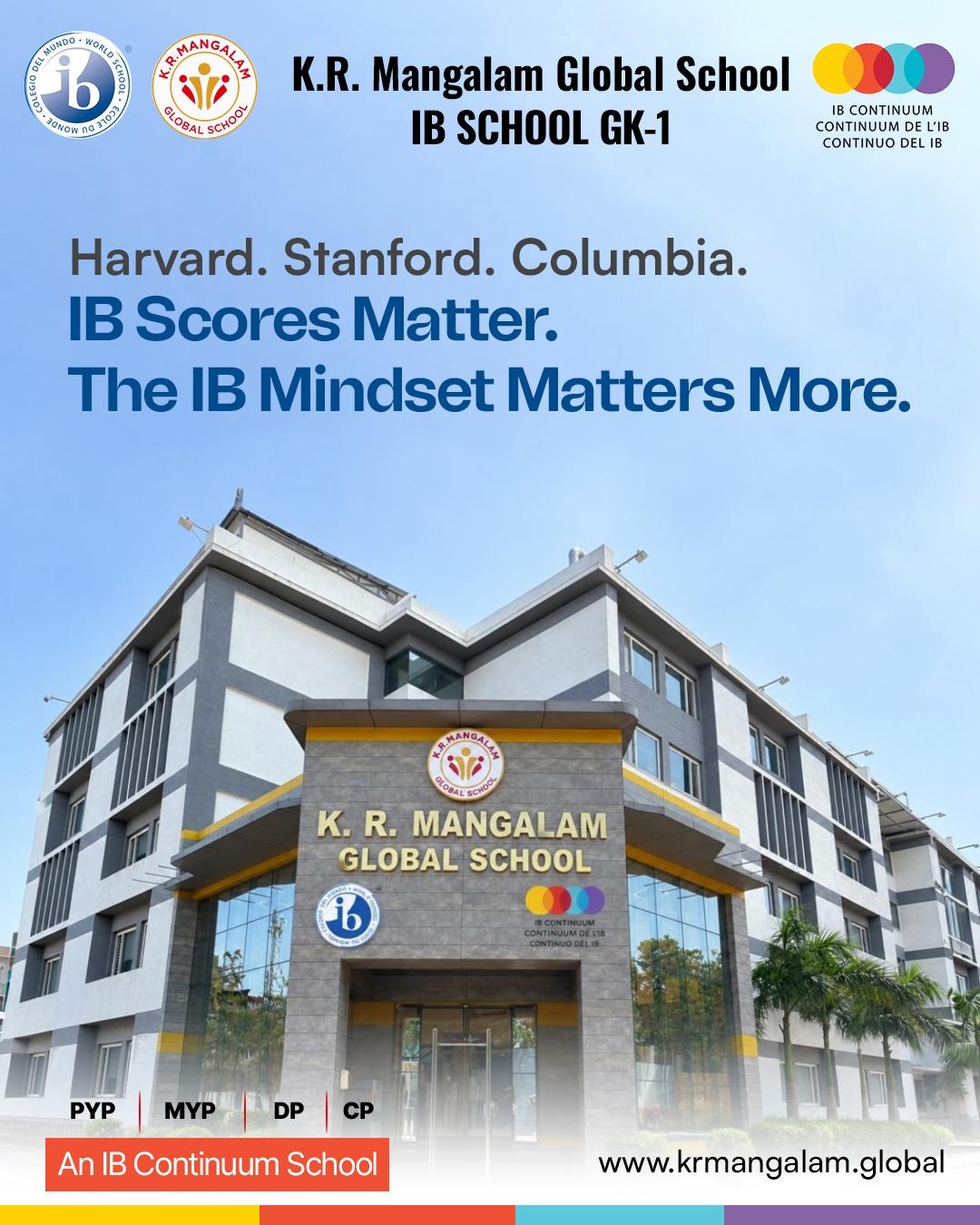
Choosing an international curriculum for your child is one of the most significant decisions a family can make. With IB and Cambridge schools now spread across South Delhi, and many more institutions describing themselves as “global” or “international”, parents need a clear, reliable way to tell genuine international education apart from clever branding.
This guide to the top international curriculum schools (IB / Cambridge) in Delhi explains how the two curricula compare and what discerning parents should look for. We’ll also look into the key factors that make K.R. Mangalam Global School (KRMGS), GK-1 increasingly appear on the shortlist of families seeking a fully authorised IB education in South Delhi.
Why Are More Delhi Families Choosing an International Curriculum?
Over the past decade, the conversation around school education in Delhi has changed. Parents are no longer asking only about board results. They want to know whether their child will learn to think independently, communicate with confidence, and adapt to a fast-changing world.
International curricula respond directly to this need. Rather than focusing mainly on content coverage, they place equal weight on inquiry, research, collaboration, and real-world application. Just as importantly, both the IB and Cambridge are recognised by universities in India and around the world, keeping a child’s future options wide open.
IB vs Cambridge: A Quick Comparison
|
Aspect |
International Baccalaureate (IB) |
Cambridge International |
|
Approach |
An inquiry-led framework that connects learning across subjects |
A subject-based curriculum with clearly defined syllabuses |
|
Programmes |
PYP, MYP, DP and CP |
Cambridge Primary, Lower Secondary, IGCSE, and AS and A Levels |
|
Assessment |
A mix of internal and external assessment, with final Diploma Programme examinations set by the IB |
Mainly external examinations set and marked by Cambridge, with coursework or practicals in some subjects |
|
Distinctive Features |
The DP core: Theory of Knowledge, the Extended Essay, and Creativity, Activity, Service (CAS) |
Wide subject choice, with Core and Extended tiers in some IGCSE subjects |
|
Best Suited For |
Learners who enjoy connecting ideas and independent inquiry |
Learners who prefer subject depth and a clear structure |
|
Recognition |
Indian and international universities |
Indian and international universities |
Both are excellent pathways. The right choice depends on how your child learns and the kind of structure that helps them thrive.
How to Choose Among the Top International Curriculum Schools?
Once you have decided on a curriculum, the next step is comparing the schools that offer it. Here are the factors that matter most.
1. Official Authorisation
A school that calls itself “international” is not necessarily authorised. Always confirm that the school is authorised by the International Baccalaureate or registered with Cambridge International. Both organisations list their schools on their official websites.
2. Continuity of the Programme
Check whether the school offers a complete pathway from the early years to Grade XII. A continuous programme spares children the disruption of changing schools or switching curricula midway.
3. Teacher Training and Expertise
International curricula call for a different style of teaching. Ask how often teachers attend official IB or Cambridge professional development, and how the school supports new staff members.
4. Student-Teacher Ratio
Inquiry-based learning depends on discussion and individual feedback. Smaller classes ensure that every child is heard, guided, and challenged at the right level.
5. Learning Spaces and Co-Curricular Depth
Labs, studios, libraries, and outdoor spaces should actively support the curriculum. Sports, arts, and community service should be an integral part of school life, not an afterthought.
6. University and Career Guidance
Strong schools begin preparing students for higher education well before Grade XII, with guidance that covers both Indian and international universities.
K.R. Mangalam Global School, GK-1: South Delhi’s Complete IB Continuum
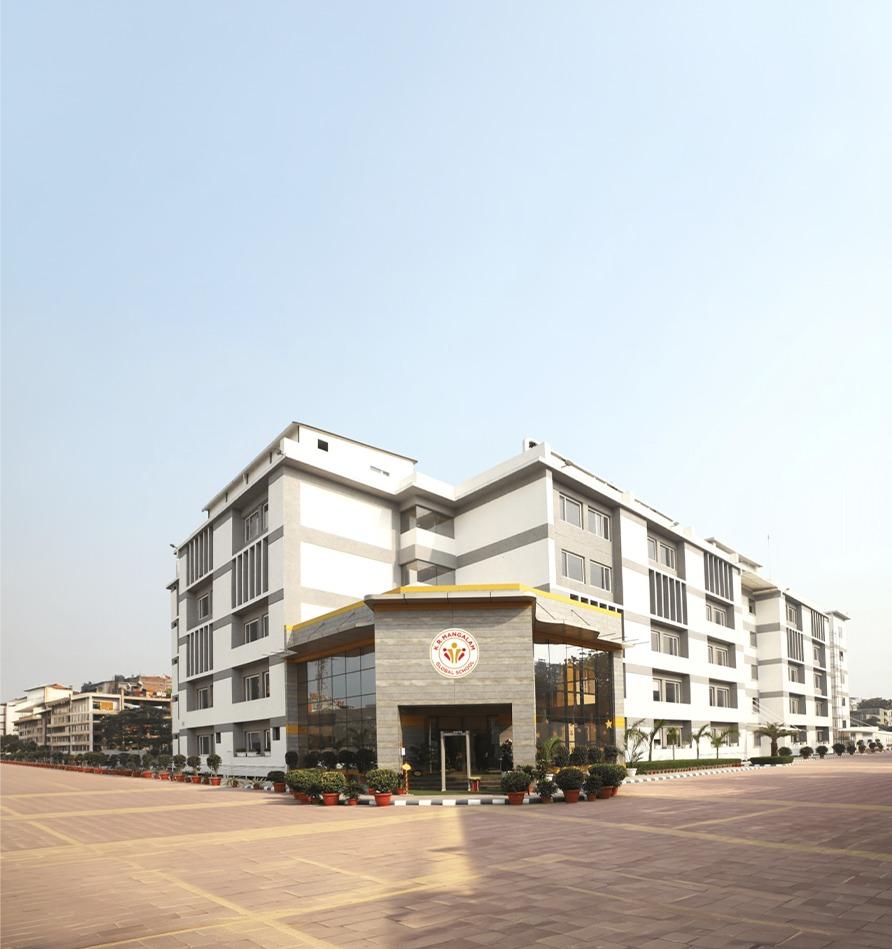
Located at N-Block, Nandi Vithi Road, Greater Kailash-1, K.R. Mangalam Global School operates under the aegis of the Dhan Singh Mal Educational Society. The school is authorised by the International Baccalaureate to offer the complete IB continuum, giving children one connected learning journey from their early years to Grade XII.
That journey unfolds across four IB programmes, each designed to build on the one before it:
- Primary Years Programme (PYP): It introduces young learners to inquiry-based learning, where curiosity, questions and hands-on exploration drive understanding.
- Middle Years Programme (MYP): Students connect subjects to real-world contexts and complete the Personal Project, an independent piece of work on a topic they care about.
- Diploma Programme (DP: It offers a broad range of subjects, from Physics, Economics and Psychology to Global Politics, Theatre and Design Technology, along with Theory of Knowledge.
- Career-related Programme (CP): It gives senior students a second pathway that combines IB academic courses with career-focused learning.
For families, this continuity is one of the school’s biggest strengths. Children don’t have to adjust to a new philosophy, assessment style or set of expectations at each stage. The skills they build in the early years, such as asking questions, reflecting on their learning and working with others, carry forward and deepen as they grow. By the time they reach the senior years, students have had more than a decade of practice in thinking independently and taking ownership of their learning.
For South Delhi parents looking for an IB school for their children, it also means a single, familiar campus that can guide their child all the way to university, without the disruption of changing schools between the primary, middle, and senior years.
What Makes KRMGS GK-1 Stand Out?
- Complete IB Continuum: All four IB programmes on one campus, supported by Pre-Foundation years for the youngest learners
- Personal Attention: A student-teacher ratio of 10:1, so that every child’s progress is closely tracked and regularly shared with parents
- Purpose-Built Learning Spaces: A sand pit area, role play room, and free play area for early learners, along with labs, studios, a library, and an auditorium for older students
- Distinctive Sports Programme: Horse riding, rock climbing, shooting, squash, gymnastics, taekwondo, cricket, football, and basketball
- Future-Ready Programmes: ICT 360 for digital skills and Get IVY League Ready to support students’ university aspirations
Admissions and Key Details
- Curriculum: International Baccalaureate (PYP, MYP, DP and CP)
- Location: Greater Kailash-1, South Delhi, easily accessible from GK-2, Lajpat Nagar, Hauz Khas, and nearby colonies
- Admission Process: Online application, document submission, and an interaction or assessment, depending on the grade
- Contact: +91-9810956654 | info@krmangalam.global
Frequently Asked Questions (FAQs)
Q. Which is better, IB or Cambridge?
The IB suits learners who enjoy inquiry and interdisciplinary learning, while Cambridge suits those who prefer subject depth and a clearly defined syllabus.
Q. Are IB and Cambridge accepted by Indian universities?
Yes. Both are accepted by Indian universities, subject to each institution’s eligibility criteria for specific courses.
Q. Can a child move from CBSE to the IB?
Yes. Many students make this move successfully, especially when the school offers structured support during the first few months.
Q. Is K.R. Mangalam Global School, GK-1 an authorised IB school?
Yes. KRMGS, Greater Kailash-1, is authorised by the International Baccalaureate for the PYP, MYP, DP, and CP.
Conclusion
Selecting the right school is not about chasing a famous name or following a generic ranking. It is about finding a place where your child’s curiosity, confidence, and character can grow together.
As you evaluate the top international curriculum schools in Delhi, look closely at authorisation, teaching quality, personal attention, and the opportunities available beyond the classroom. If you are seeking a complete IB education in South Delhi for your child, we at K.R. Mangalam Global School, GK-1, welcome you to visit the campus and experience the IB first-hand.
Enquire now for admissions, as seats fill quickly. Call us on +91-9810956654 or write to info@krmangalam.global to book a campus visit.